
An audit notice arrives, and it feels routine — just another task on the to-do list. But as the paperwork gets pulled together, the realization sets in. The nightmare doesn't start with the audit; it begins months earlier with disorganization.
Why Roofing Insurance Audits Catch Owners Off Guard
Roofing companies often prioritize production and sales, assuming their paperwork is in order. Compliance isn't a focus until an audit forces their hand. The reality is that roofing compliance issues build slowly over time, catching owners off guard when it's too late to prepare.
The Most Common Audit Breakdowns in Roofing Companies
Several issues consistently plague roofing audits:
Missing or expired COIs from subcontractors: Subcontractor agreements can be casual, leading to expired certificates being overlooked. This becomes costly during audits, as insurers may assign higher risk categories.
Payroll misclassification: Confusion between 1099 and W-2 classifications results in incorrect payroll taxes and insurance premiums. Missteps here often lead to significant financial penalties.
Inconsistent job costing tied to labor reporting: Poor tracking of labor for specific jobs creates gaps in financial records, complicating audits and driving up costs.
Poor documentation of crew roles: Undefined crew roles cause confusion in workers comp reporting, increasing audit complexity and risk.
Incomplete workers comp reporting: Missing or inaccurate workers comp details can lead to inflated premiums when auditors adjust figures to their advantage.
How Disorganized Payroll and Labor Data Creates Risk
Changing crew sizes and tracking overtime can be challenging. Misunderstandings between subcontractor and employee roles only add to the chaos. Disorganized payroll data puts roofing businesses at risk, particularly when trying to justify labor costs during an audit.
Why “We’ll Figure It Out When It Happens” Doesn’t Work
Reactive document gathering is a recipe for stress and inflated audit results. It's tempting to put off organizing until an audit is imminent, but this approach leads to costly delays and heightened scrutiny. Preparation should be ongoing, not reactionary.
What Organized Roofing Compliance Actually Looks Like
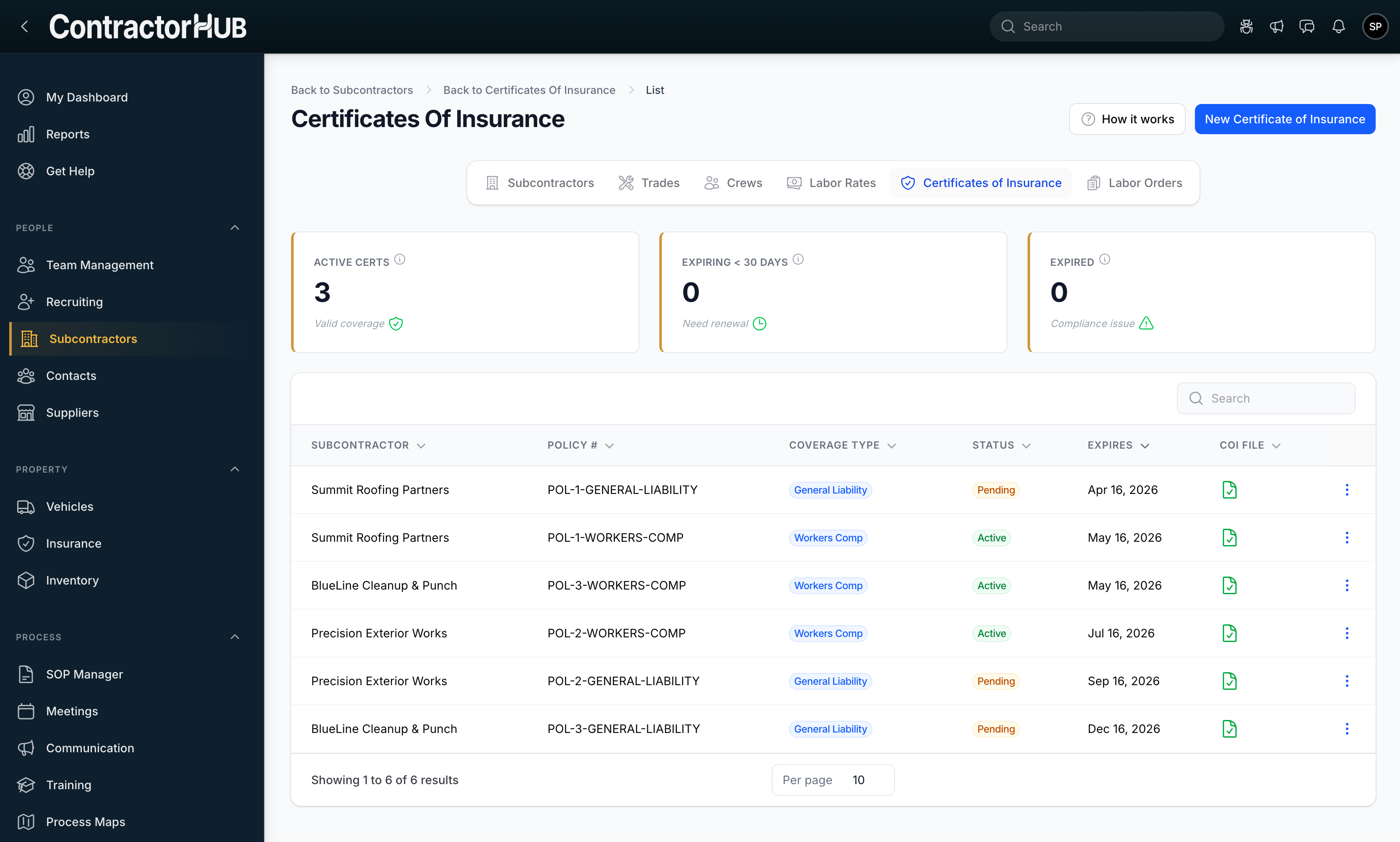
Proactive roofing compliance means having systems in place. Centralized COI tracking, clean payroll records, documented worker classifications, and clear job labor allocation are essential. These systems don’t just prevent audits from turning into nightmares — they streamline daily operations.
How Systems Prevent Audit Nightmares Before They Start
Roofing companies using centralized systems benefit from having compliance documents stored in one accessible place, accurate labor tracking, and up-to-date insurance documentation. This organization reduces stress and risk during audits dramatically. Such systems enhance overall business visibility, making them indispensable tools for prevention.
In conclusion, roofing insurance audits don't become nightmares because they are inherently unfair. Disorganization is the culprit. By prioritizing prevention over panic, roofing business owners can face audits confidently and avoid costly surprises.


