
Running a successful roofing business requires careful management of numerous moving parts, from marketing and sales to production and closeout. Unfortunately, even with the best intentions, roofing jobs can fall through the cracks, leading to lost revenue, frustrated teams, and customers choosing a competitor who seems more organized. Understanding why this happens (and how to prevent it) is essential for building a scalable, reliable roofing operation.
Poor Communication & Process
Miscommunication between team members or with clients can lead to misunderstandings about project scope, timelines, pricing, and next steps. When roofing sales, production, and field teams aren’t aligned, jobs stall or derail entirely.
Solution: Establish clear communication rhythms such as weekly production meetings and daily huddles. Use tools that centralize job updates, notes, and status changes so everyone is working from the same source of truth to deliver quality outcomes for the customer.
Inconsistent Lead Tracking
Failing to track leads properly can cause opportunities to slip away unnoticed. Without visibility into where each lead sits, or who owns the next step, potential customers often go cold or choose another roofing company who follows up faster.
Solution: Implement a robust lead-tracking system that captures and monitors every inquiry from first contact to contract. ContractorHUB’s Pipeline module helps by connecting leads, estimates, and jobs in one view, ensuring nothing gets lost.
Inaccurate Roofing Estimates
Inaccurate estimates (whether in price, materials, or timeline) create downstream issues that ripple through production. Underestimated jobs strain crews and budgets, while overestimated timelines frustrate homeowners.
Solution: Train your team to deliver consistent, data-backed estimates. Software that leverages historical job data and current pricing helps reduce guesswork and improve accuracy.
Production Timeline Challenges (Sales & Roofing Production Misalignment)
One of the most common reasons roofing jobs fall through the cracks is misalignment between Sales and Production. Sales teams are focused on closing deals quickly, while production teams are focused on capacity, weather, materials, and crew availability. When these two sides don’t operate from the same plan, timelines suffer.
Common issues include:
Jobs sold without confirming production capacity
Promised start dates that production can’t realistically meet
Delays due to untracked permits, materials, or supplements
Customers left in the dark when timelines shift
When production timelines slip, homeowners lose confidence, causing them to cancel or choose another contractor before the job ever starts.
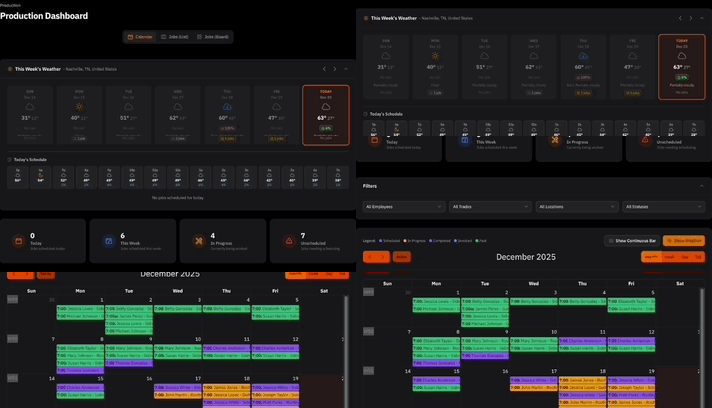
Solution: Create a shared planning process between Sales and Production. Jobs should only move forward once timelines, dependencies, and resources are visible and agreed upon. Plan ahead for seasonality and timelines where issues may arise. ContractorHUB bridges this gap with tools that help you plan ahead, and by tying roofing jobs directly to production schedules, giving teams real-time visibility into workload, readiness, and constraints.
Inadequate Resource Allocation
Even well-planned jobs can stall if materials or labor aren’t available at the right time. Scrambling for crews or supplies creates delays and erodes margins.
Solution: Regularly review labor capacity, supplier lead times, and inventory levels. Scheduling tools that show resource allocation across all jobs help prevent overbooking and last-minute surprises.
Lack of Follow-Up
Lost opportunities often stem from poor follow-up—both before and after the sale. Customers expect proactive updates, especially when timelines change.
Solution: Build follow-up into your process with automated reminders and clear ownership. ContractorHUB’s Pipeline module helps teams prioritize the right follow-ups at the right time.
Inconsistent Marketing Efforts
An unpredictable flow of leads makes planning nearly impossible. Too many jobs overwhelm production; too few leave crews idle.
Solution: Use analytics to understand which marketing channels drive profitable, closeable work. ContractorHUB ties lead sources to real outcomes so you can stabilize demand and plan confidently.
Conclusion
Roofing jobs fall through the cracks when visibility, alignment, and accountability break down. By improving communication, tightening lead tracking, aligning Sales and Production timelines, and using tools like ContractorHUB, roofing companies can eliminate chaos and build a more predictable, profitable operation.
When you understand your pipeline, production capacity, and timelines in one connected system, you can make faster decisions, keep customers informed, and ensure jobs move smoothly from sale to completion—without slipping through the cracks.


