Many roofing companies are initially built on the intuition and hands-on leadership of their founders. While this instinct-driven approach works well when a business is small, it can quickly become a bottleneck as the company grows. In this post, we’ll explore why intuitive decision-making may hinder larger roofing operations and how leadership can be enhanced through data and systems.
Why Gut Decisions Work in Early-Stage Roofing Companies
In the early stages of a roofing business, owners are closely connected to every aspect of their operations. They know every job, crew, and customer personally, which makes intuitive decisions effective. This proximity allows for quick adaptations and immediate problem-solving.
What Changes as Roofing Companies Grow
As roofing companies expand, they encounter increased job volume, more team handoffs, and limited visibility into daily operations. These roofing growth challenges make it difficult to rely solely on instinct, as information becomes fragmented and complex.
Where Intuition Starts to Break Down
Relying on gut-based roofing business decisions can lead to delays, inconsistent outcomes, and reactive leadership. As complexity mounts, intuition alone is insufficient to ensure quality and efficiency.
The Leadership Cost of Making Decisions Without Data
Decisions without data can lead to burnout among leadership, reduced trust within teams, constant firefighting, and eventually stalled growth. These roofing leadership challenges arise from uncertainty and reliance on outdated or incomplete information.
1. Credibility Erosion with Your Team
What it looks like without data:
A leader makes calls based on instinct:
“Sales are fine, we just need to push harder.”
“That crew is slow because they don’t care.”
“We can take on more work; we’ve handled worse.”
The hidden cost:
When decisions don’t match reality on the ground, crews stop trusting leadership. Foremen and managers see the cracks before owners do. If leadership dismisses what data would clearly show, people disengage or stop speaking up.
Leadership impact:
Less honest feedback
More “yes” conversations, fewer real ones
Problems escalate instead of being surfaced early
2. Misplaced Accountability (Blaming the Wrong Thing)
What it looks like without data:
Firing a salesperson when the issue is lead quality
Yelling at crews when schedules are unrealistic
Cutting marketing when the real problem is close rate
The hidden cost:
You fix the symptom, not the cause. High performers get frustrated when they’re blamed for systemic issues they can’t control.
Leadership impact:
Good people burn out or leave
Real issues persist or worsen
Leadership is seen as reactive, not strategic
3. Decision Fatigue and Constant Firefighting
What it looks like without data:
Every issue feels urgent because nothing is prioritized. Leadership is constantly pulled into:
Schedule disputes
Margin surprises
Cash stress
Customer complaints
The hidden cost:
Without early indicators, leaders only see problems when they’re already expensive. Every decision becomes emotionally charged because there’s no objective reference point.
Leadership impact:
Exhaustion and burnout
Less time spent on growth or strategy
More impulsive decisions under stress
4. Overconfidence in Good Times, Panic in Bad Times
What it looks like without data:
During busy seasons: “We’re crushing it—let’s hire fast.”
During slow seasons: “Something’s wrong—cut everything.”
The hidden cost:
Without trend data, leadership overreacts to short-term conditions. This creates whiplash for the organization.
Leadership impact:
Poor hiring and firing decisions
Overextended overhead
Teams feel instability even when revenue looks “fine”
5. Inconsistent Messaging Across the Organization
What it looks like without data:
Different leaders tell different stories:
Sales says jobs are priced too tight
Ops says sales is overpromising
Finance says margins are shrinking
The hidden cost:
Without shared metrics, alignment breaks down. Meetings become opinion-based debates instead of problem-solving sessions.
Leadership impact:
Slower decisions
More internal friction
Leadership loses the ability to rally the team around a clear plan
6. Personal Stress and Second-Guessing
What it looks like without data:
Leaders constantly ask themselves:
“Did I make the right call?”
“Is this a temporary blip or a real issue?”
“Am I missing something obvious?”
The hidden cost:
Decision-making becomes heavier and lonelier. Data doesn’t remove responsibility—but it shares the burden.
Leadership impact:
Increased anxiety
Loss of confidence over time
Reduced clarity when it matters most
7. Strategic Drift
What it looks like without data:
Expanding into new services without knowing profitability
Adding crews without understanding utilization
Chasing revenue instead of margin
The hidden cost:
The business grows, but not intentionally. Leadership becomes reactive instead of directional.
Leadership impact:
Vision becomes fuzzy
Strategy changes quarter to quarter
Long-term goals are harder to commit to or communicate
Data vs. Gut Decisions in Roofing Leadership
Comparing intuition with data-driven decision-making reveals a clear advantage for the latter. Data-informed decisions offer clarity and consistency, allowing leaders to guide their roofing business with confidence rather than exerting control.
How Visibility Creates Better Roofing Business Decisions
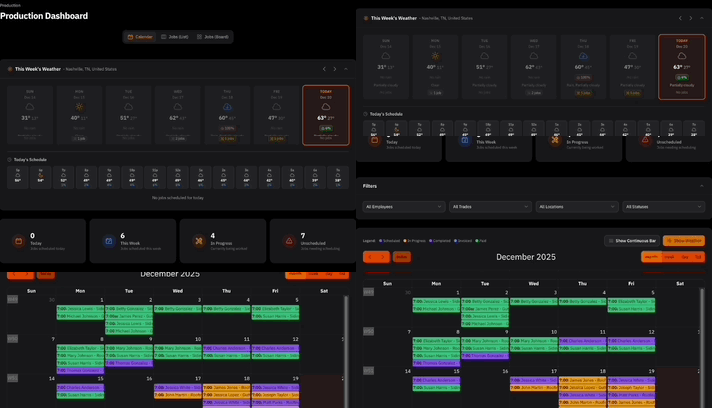
With real-time job status updates, performance insights, and accountability measures, leaders can make informed decisions that enhance outcomes. This visibility transforms how roofing operations are managed, from job progress to crew accountability and quality control.
When Roofing Business Software Becomes a Leadership Tool
Roofing business software serves as a crucial tool for supporting quick, consistent decisions. By providing detailed insights and streamlining processes, software complements a leader’s experience without replacing it, ensuring sustainable growth.
In conclusion, successful roofing leaders evolve from relying purely on instinct to embracing system-supported decision-making. As growth continues, these leaders must ensure their choices are driven by clear data rather than educated guesses.
Ask yourself: Areyour current decisions are driven by real visibility or only educated guesses?


